
Construction Mediation in Germany
When a construction project in Germany involves parties from more than one country, the dispute is rarely only about the building. One side works to German contract practice and expects claims to be filed, documented and answered in a particular way. The other side reads the same behaviour as escalation, or misses a deadline nobody flagged as one. By the time lawyers are involved, the disagreement is about two things at once: what happened on site, and how the process itself is supposed to work.
That is the situation I work in.
When this helps
- An international client or investor is in dispute with a German main contractor over variations, delay or defects.
- A contractor or supplier from abroad is working on a German site and finds that the contractual mechanics — notices, claims, acceptance — do not behave the way they do at home.
- A joint venture or consortium between a German and a foreign partner is deadlocked over cost, scope or responsibility.
- Litigation in Germany is on the table, and everyone involved realises it will take years, run in German, and end the working relationship.
A short conversation brings clarity.
30 minutes, free of charge, confidential.
What is different about a German construction dispute
Most international parties are surprised by the same three things, and knowing them in advance changes how a negotiation goes.
The paper trail carries more weight than the conversation. German construction practice is built on written notices and documented claims. A justified position that was never put in writing at the right moment is harder to recover than most foreign parties expect.
The alternatives to court are not the ones you know. Adjudication is widely used in English-speaking markets and barely used here, even though German rules provide for it. What German projects actually use is mediation, conciliation (Schlichtung), in which a neutral with construction expertise assesses the dispute and proposes a settlement, and expert determination on a single technical question. Which of these fits depends on what is actually in dispute.
Directness is not hostility. A German project meeting can sound confrontational to someone used to a different register, and restraint can read as evasion in the other direction. A good part of the work is making that difference discussable rather than letting it harden into distrust.
I explain how these things work. I do not advise on German law — that is your lawyer's role, and I work alongside counsel rather than in place of them.
How I work
Mediation runs alongside the project, not instead of it. I speak with each side separately first, then bring everyone to the table, and the result is an agreement the parties write themselves — not a decision imposed on them. Sessions take place in Berlin, on site, or online.
I work in English, German and Japanese, and I can run a session in more than one language without an interpreter. In cross-border construction disputes that matters more than it sounds: the party arguing in its second language is usually the party that ends up conceding.
Background
- Certified mediator under the German Mediation Act, accredited by Bundesverband Mediation (BM) and Qualitätsverbund Mediation (QVM); IMI Certified Mediator
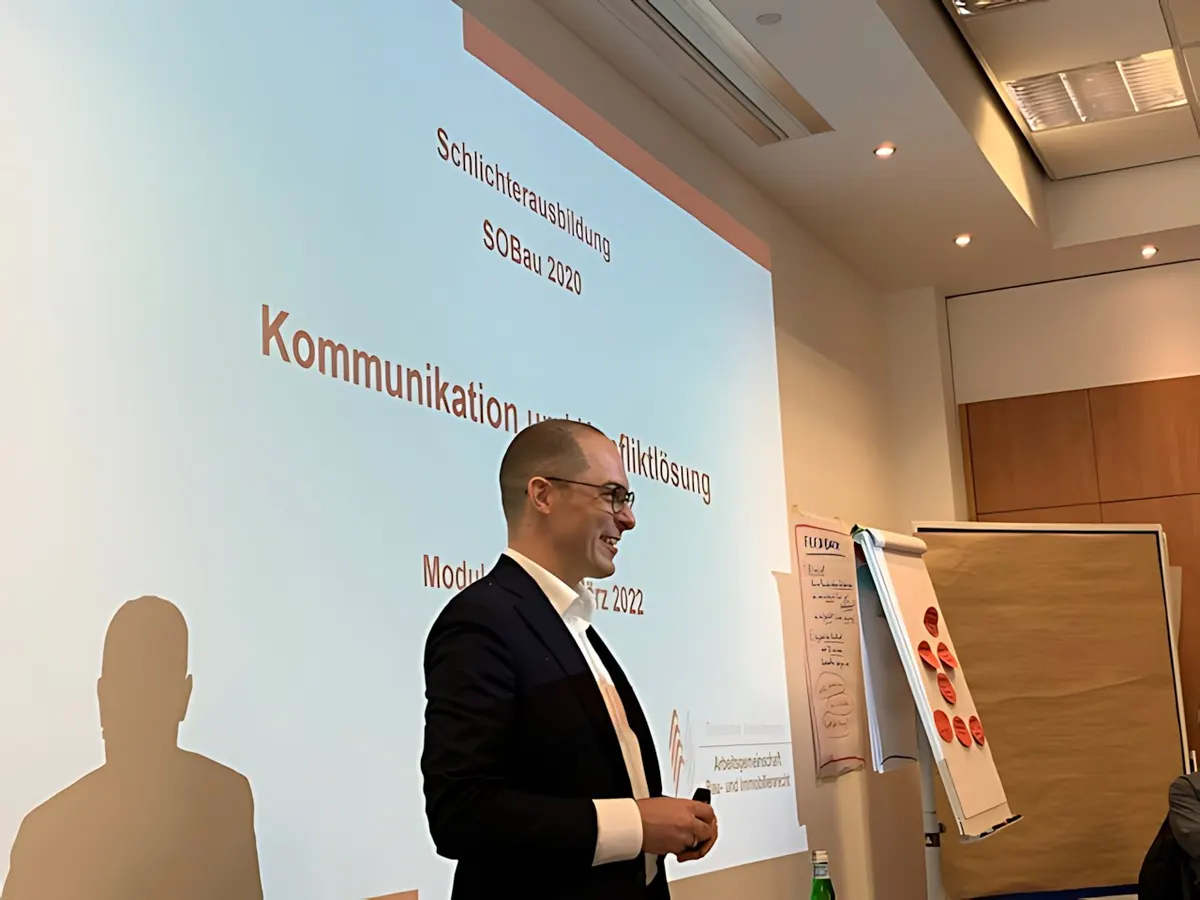
- For the past five years, part of the teaching team of the conciliation training run by ARGE Baurecht, the construction and real estate law group within the German Bar Association — the programme qualifies specialist construction lawyers to act as conciliators under the SOBau 2020 rules
- Mediation and facilitation in construction projects, between clients, planners and contractors
- Listed non-resident mediator with the Japan International Mediation Center (JIMC) in Kyoto
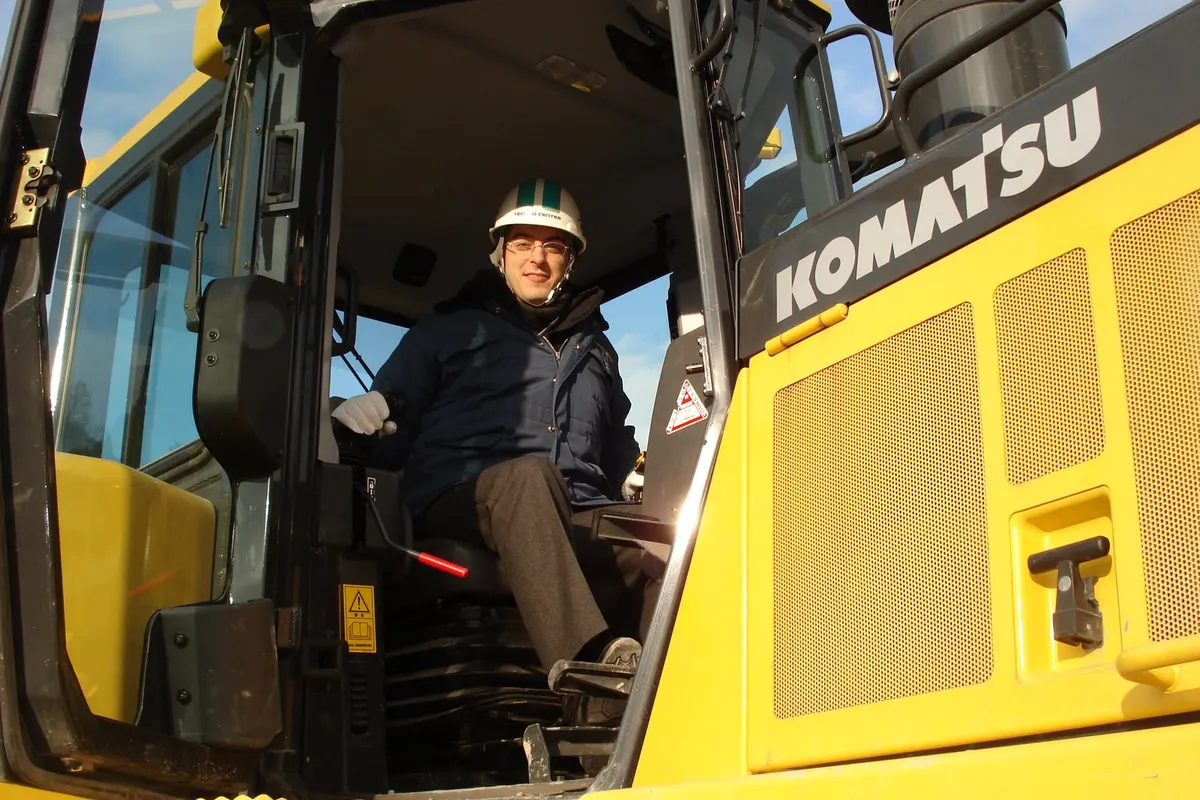
- One year at the Tokyo headquarters of Komatsu, one of the world's largest manufacturers of construction equipment, as Product Support Coordinator
Different rates apply to cross-border cases. Details are under Process and fees.
For German-speaking parties on the same project, there is a separate page in German: Baumediation.
The ProvenExpert review seal is not loaded without your consent.
All reviews on ProvenExpert and Google.
A short conversation brings clarity.
30 minutes, free of charge, confidential.