
Intercultural Mediation in Berlin
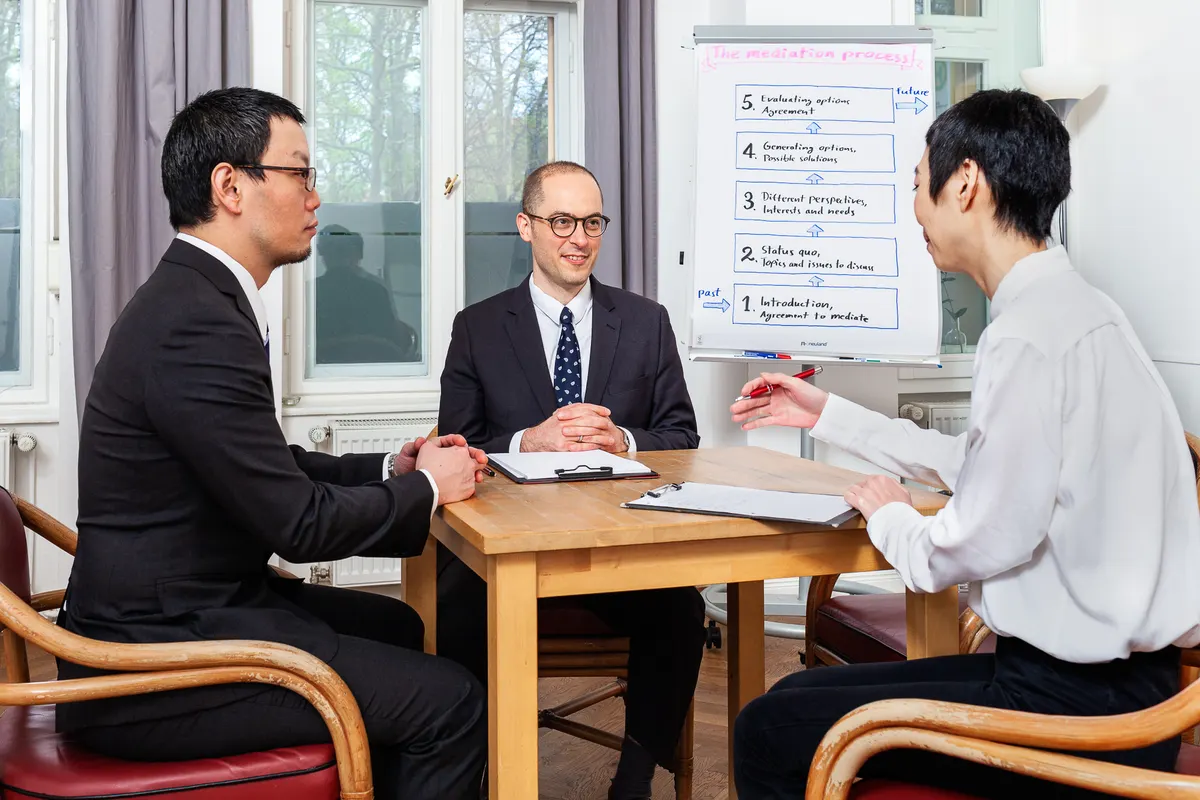
When people with different backgrounds work together, conflicts often arise where each side takes something different for granted: how directly criticism is voiced, who decides, what a commitment means. People are rarely aware of these assumptions. The same observation is then interpreted differently: what one side intends as polite restraint, the other reads as a lack of commitment. Intercultural mediation makes such interpretations visible, so that the parties can clarify what they expect of each other and how they want to work together in future.
I facilitate these conversations in German, English and Japanese, in Berlin or online.
When intercultural mediation makes sense
- Colleagues from different countries understand their roles and tasks differently.
- Misunderstandings keep piling up in an international team, even though everyone speaks good English.
- Departments such as engineering, sales and marketing follow their own rules and talk past each other.
- A partnership with an organisation abroad has stalled, and neither side quite knows why.
- Some team members feel sidelined because they cannot respond as quickly as others in the working language.
If the conflict has no cultural dimension, Team mediation is the better fit.
My approach: mediating between people, not between cultures
Nationality explains little. Everyone belongs to several groups at once: a profession, an organisation, a generation, a language. For me, intercultural mediation therefore does not mean translating between two national cultures. It means paying deliberate attention to four things in a conflict:
- Unspoken values and rules: What do the parties consider normal, sensible and appropriate, for example regarding punctuality, hierarchy or decisions?
- Language and communication: What does someone mean by a word? How directly do people speak? How do we deal with the fact that not everyone is speaking their first language?
- Prejudices and attributions: Which assumptions about the other side, and about one's own group, shape the conflict, and where are they confirmed or disproved?
- Status and power: Who speaks the working language as their first language, who is in the minority in the team, who holds which position?
The process itself is also shaped by culture. Raising a conflict openly at the table is not something everyone takes for granted. I therefore adapt the process to the people involved, for example with individual conversations before the first joint session.
My approach is based on the perspective model of intercultural mediation (Kriegel-Schmidt et al.).
From practice
One came from East Asia, the other from Germany. Their collaboration had reached a deadlock. The topics were their roles, the division of tasks and the way they spoke to each other.
Outcome
The mediation ended with clear agreements. Both described a sense of relief and looked ahead to their future collaboration with confidence.
Two-day workshop. The company was under economic pressure, new management had taken over, and technological developments were changing the work of all three departments. The topics were collaboration between the departments, clarifying roles and dealing with pressure and change.

Susan Tay
Mediator and co-founder of PracticeForte Advisory, Singapore (cooperation partner)
“As a co-mediator with Christian in cross-border child abduction cases, I find working with Christian straightforward and effective. I've learned much from him from a social science perspective and would immediately work with him again. As a co-trainer, Christian has been invaluable. He is active and responsible, an asset to any team fortunate enough to have him as a member. PracticeForte Advisory is very proud of him as both a partner and as a mediator on the PracticeForte Panel of International Mediators.”
The ProvenExpert review seal is not loaded without your consent.
All reviews on ProvenExpert and Google.
Languages
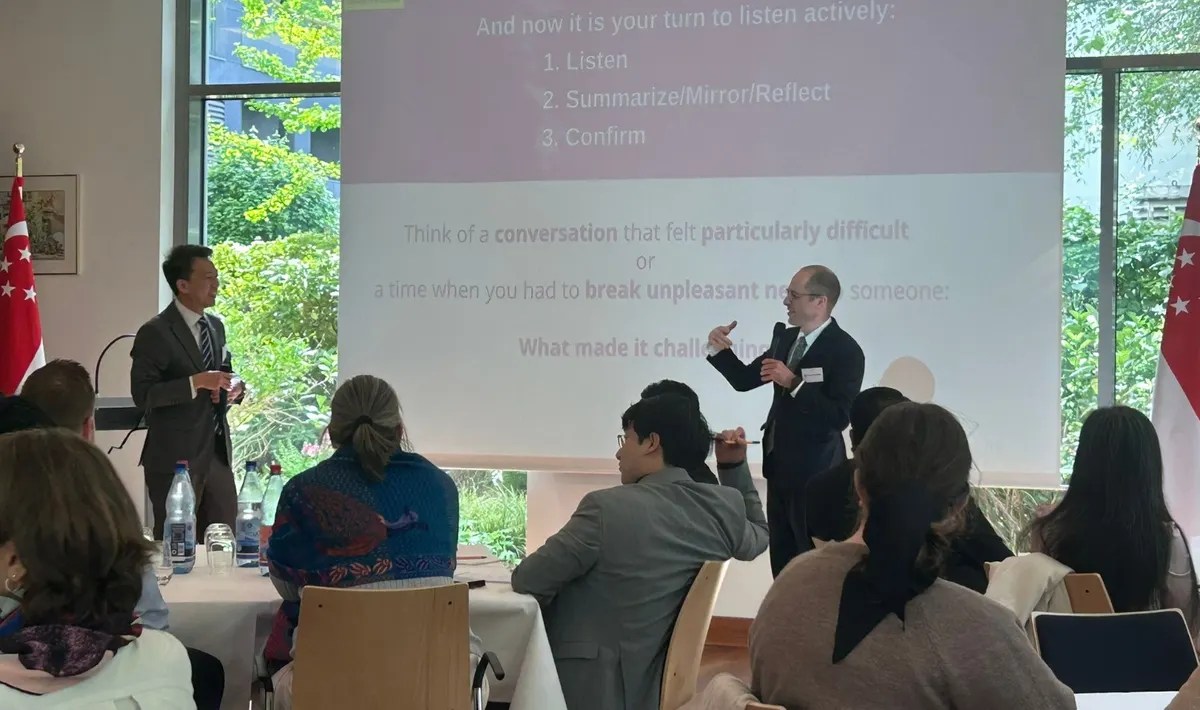
I work in German, English and Japanese. For German-Japanese constellations there is the Japan Desk, for cooperation with Singapore the Singapore Desk. If some parties are not confident in any of these languages, we agree in the initial call how to handle this. Options are interpreters, or co-mediation with a colleague who speaks the parties' language.
Qualifications
- Intercultural Mediator (Friedrich Schiller University Jena)
- Regular courses on intercultural mediation at the University of Potsdam
- IMI Certified Mediator (International Mediation Institute)
- Listed non-resident mediator at the Japan International Mediation Center in Kyoto (JIMC)
- Degree in Japanese Studies, six years living in Japan
More under Profile.
Fees
The fee is €220.00 per hour plus statutory VAT where applicable (for services subject to German VAT currently 19%, i.e. €261.80 gross). Details are under Process and fees.
Frequently asked questions
What is intercultural mediation?
Intercultural mediation is mediation that deliberately takes the parties' cultural backgrounds into account: unspoken values and rules, language and communication, prejudices and attributions, and status and power. It mediates not between cultures but between people who have been shaped differently.
Does a conflict have to be “cultural” for intercultural mediation to be the right fit?
No. Whether culture plays a role often only becomes clear in conversation. Looking at different backgrounds helps in many conflicts, including between departments with their own professional cultures or between generations.
What if not everyone speaks the same language well?
In the initial call we agree which language the mediation will be conducted in. I can switch between German, English and Japanese. For other languages we work with interpreters or in co-mediation with a colleague who speaks the language in question. What matters is that all parties can express themselves equally well.
How is this different from intercultural training?
Training conveys knowledge and practises situations, often without an acute cause. Mediation clarifies a specific conflict between specific people. For teams that want to work preventively, there is the seminar German-Japanese teams and the Team-Dojo.
A short conversation brings clarity.
30 minutes, free of charge, confidential.